
For service questions, see garage door maintenance in Pittsburgh. Confirm the listed ZIP coverage before calling.
Begin with the threshold and the opening
Keep leaves, grit and stored items away from the travel path. Moisture and debris can affect a bottom seal or obstruct a sensor beam. Before pressing the control, look for a blocked opening. If the seal appears frozen to the floor, do not use repeated opener cycles to break it free; seek model-specific advice and address the obstruction safely.
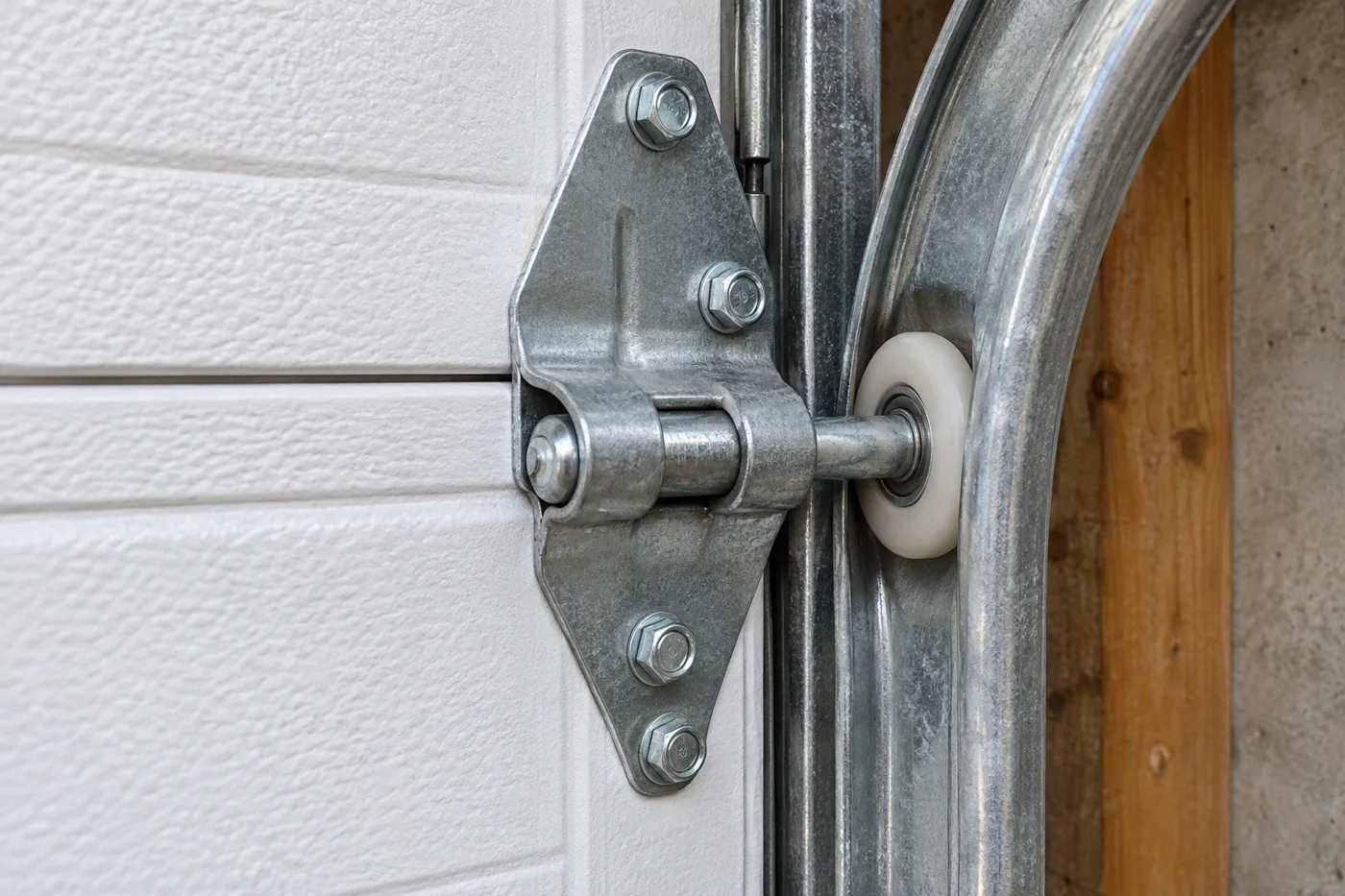
For Pittsburgh homes and properties
In the Pittsburgh footprint, integral garages beneath brick houses and detached garages on tight or sloping approaches can complicate access. Explain whether another entrance exists and whether a vehicle is trapped. This is practical information for the service discussion, not a reason to force the door.
Notice a change in operation
Listen from a safe place for a new rattle, scrape or bang. A gradually increasing noise can have a different cause from a sudden failure after an impact. Do not place hands near rollers or hinges to locate the sound. Stop use if a cable is frayed, the door is crooked or a safety feature fails.
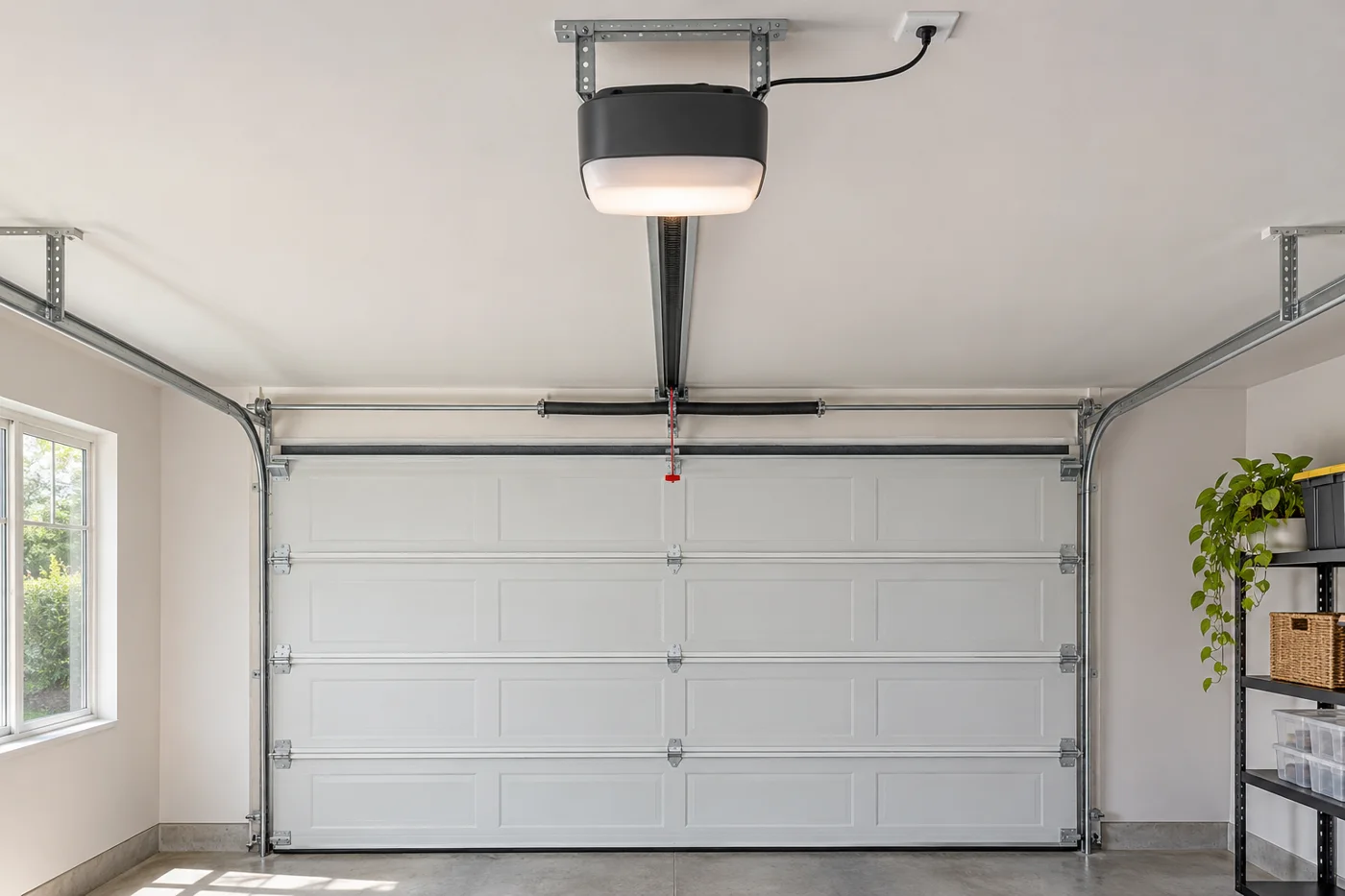
Use the correct care instructions
Some rollers, hinges and drive systems have specific lubrication requirements. Applying a general spray everywhere can collect debris or affect components that should stay dry. Follow the door and operator manuals, and ask which maintenance tasks are appropriate for the installed equipment. Tension adjustments and loaded fixtures are professional work.
Plan around the actual building
An attached garage, a shaded detached structure and a frequently used workshop do not have identical care needs. Mention exposure, drainage, noise and usage during a maintenance discussion. A weather seal cannot fix every water-management problem around an opening, and insulation alone does not guarantee a comfortable or conditioned garage.
Moisture at the floor has more than one explanation
A worn bottom seal, uneven threshold, wind-driven rain and drainage around the driveway can all create different water paths. Describe where moisture appears and whether it follows a particular weather pattern. Do not assume a tighter closing-force setting will solve it. The seal should be considered alongside the opening and surrounding water management. Keep stored items away from damp areas and from the photo-eye beam. If timber or a panel is deteriorating, have the condition assessed rather than covering it with a finish and continuing to operate a potentially weakened assembly.
Make a routine that does not become a repair attempt
A visual check can remain simple: keep the opening clear, look for obvious damage and notice whether the sound or motion has changed. Follow the manufacturer’s instructions for any permitted cleaning or lubrication. Avoid removing fasteners to inspect behind them and never loosen brackets that carry cable or spring loads. If the system behaves differently, stop the routine and arrange an assessment. Keeping a dated note of the observation and the equipment model is more useful than spraying several components at once and losing track of what changed. Safe upkeep includes recognizing when the task has moved beyond upkeep.
Connect the next question
For a heavy or uneven door, read about spring and lifting-system assessment. If only the controls behave differently, explore opener diagnosis. When a new assembly is being considered, the installation guide explains fit and clearance. For a motor upgrade, compare the fit questions in opener installation.
Local considerations: Lawrence garage door guidance ↗ McDonald garage door guidance ↗ . Check each locality’s listed ZIPs; a postal name does not establish complete town coverage.
Related reading: door will not open, repair or replace and seasonal care.
Further reading and safety references
Follow the instructions for your exact door and opener. General context: DASMA safety and maintenance; U.S. Consumer Product Safety Commission: automatic garage door openers. This guide supports recognition and planning; it is not a procedure for work on loaded hardware.