
For service questions, see garage door opener repair in Pittsburgh. Confirm the listed ZIP coverage before calling.
Different controls provide different clues
If the wall button operates the door but a remote does not, describe that distinction. If none of the controls work, note whether the unit has power or shows a light pattern. Use the exact model manual for accessible checks. Do not open electrical enclosures or probe wiring, and do not stand in the path of the door while testing.
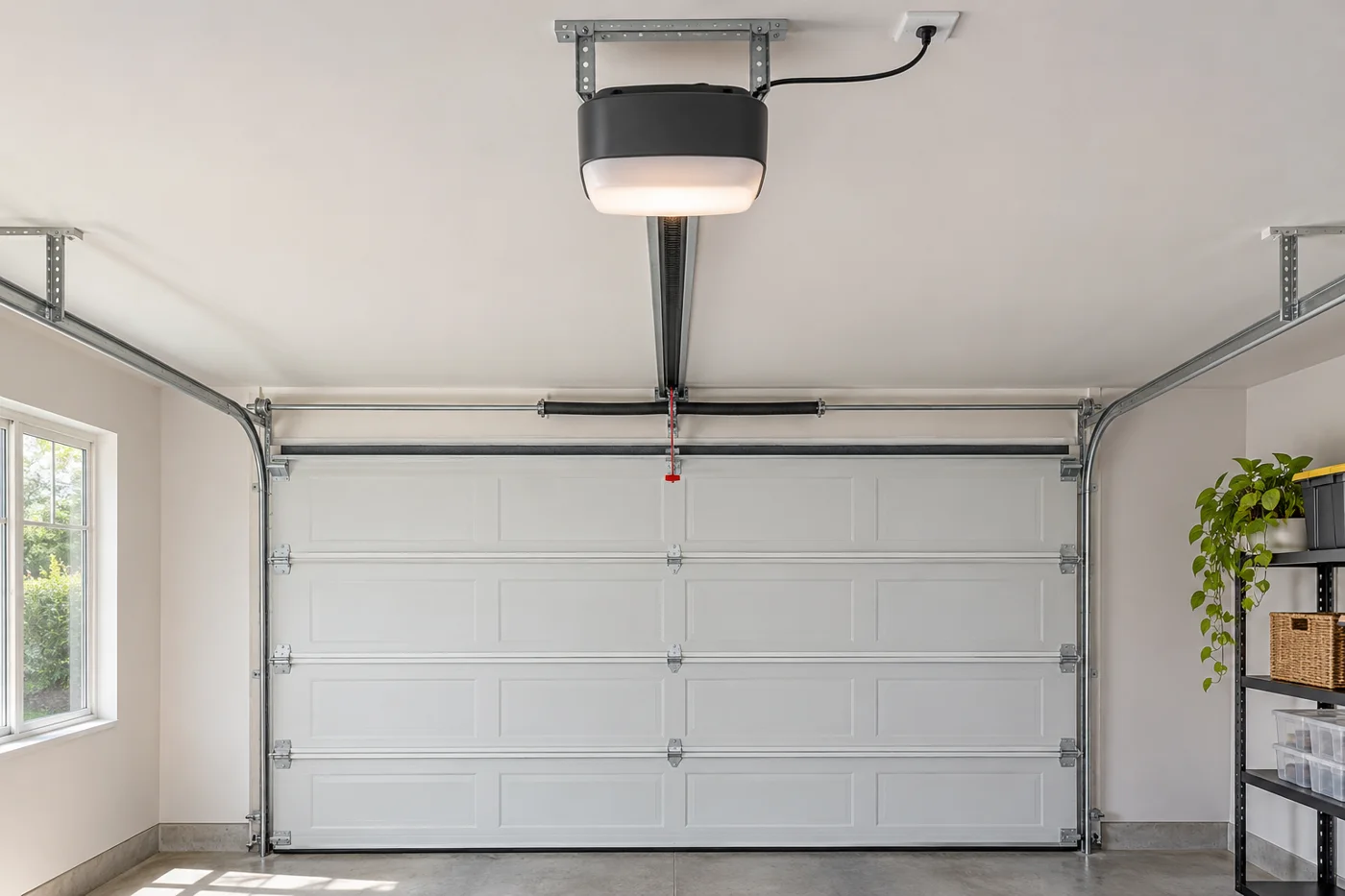
For Pittsburgh homes and properties
In the Pittsburgh footprint, integral garages beneath brick houses and detached garages on tight or sloping approaches can complicate access. Explain whether another entrance exists and whether a vehicle is trapped. This is practical information for the service discussion, not a reason to force the door.
Watch for mechanical warning signs
A moving motor with a stationary door, uneven travel, a loose cable or grinding can indicate a mechanical problem. The operator should not overcome a broken spring or binding track. Stop cycling when the door behaves abnormally. A safety reversal is information about the system, not an inconvenience to defeat by holding controls or adjusting force.
Sensors are safety equipment
Keep an obvious obstruction out of the photo-eye path from a safe position. Report whether the fault appears in direct sunlight or wet weather, and whether the sensor indicators change. Misalignment, damaged wiring and mechanical resistance need different remedies. Never bypass the eyes or disable reversal to obtain a closing cycle.
When a new operator is discussed
First establish whether the door is suitable and properly balanced. Then discuss clearance, power, noise, controls and battery-backup preferences. Ask how existing access codes will be managed and how the safety devices will be demonstrated. Smart features are useful conveniences, but the complete physical system still needs appropriate installation and care.
One successful cycle is not the entire diagnosis
Intermittent problems deserve a description of when they occur. A door that reverses only in the morning, a remote that works from inside but not outside and a motor that stops after repeated cycles provide different clues. Record the pattern without intentionally reproducing unsafe behavior. Do not stand in the opening to see whether the door will stop for you. A control that works once does not prove that safety devices, door balance and the complete travel are correct. Explain the sequence and ask what tests are appropriate for the exact model and door system.
Plan access before resetting controls
If access credentials may need to change, identify all the devices in use: household remotes, vehicle buttons, wall controls, keypads and connected accounts. Keep the operator manual and discuss the intended users. Do not publish access codes in a service request or attempt broad resets without knowing how household access will be restored. A replacement operator may use different accessories or setup steps, so existing remotes should not be assumed compatible. Ask for clear handover instructions and a demonstration of the normal controls, emergency procedure and safety features after installation or repair.
Connect the next question
For a heavy or uneven door, read about spring and lifting-system assessment. If only the controls behave differently, explore opener diagnosis. When a new assembly is being considered, the installation guide explains fit and clearance. For a motor upgrade, compare the fit questions in opener installation.
Local considerations: Hillsville garage door guidance ↗ Jeannette garage door guidance ↗ . Check each locality’s listed ZIPs; a postal name does not establish complete town coverage.
Related reading: door will not open, repair or replace and seasonal care.
Further reading and safety references
Follow the instructions for your exact door and opener. General context: DASMA safety and maintenance; U.S. Consumer Product Safety Commission: automatic garage door openers. This guide supports recognition and planning; it is not a procedure for work on loaded hardware.