
For service questions, see commercial garage door repair in Pittsburgh. Confirm the listed ZIP coverage before calling.
Identify the equipment and the site
Explain whether the opening is a residential-style sectional door, a rolling closure or another commercial assembly. Give approximate dimensions, use and cycle frequency. Mention impact damage, operator controls and access restrictions. Specialized equipment and fire-rated closures need explicit service qualification; a general garage-door request is not confirmation of that capability.
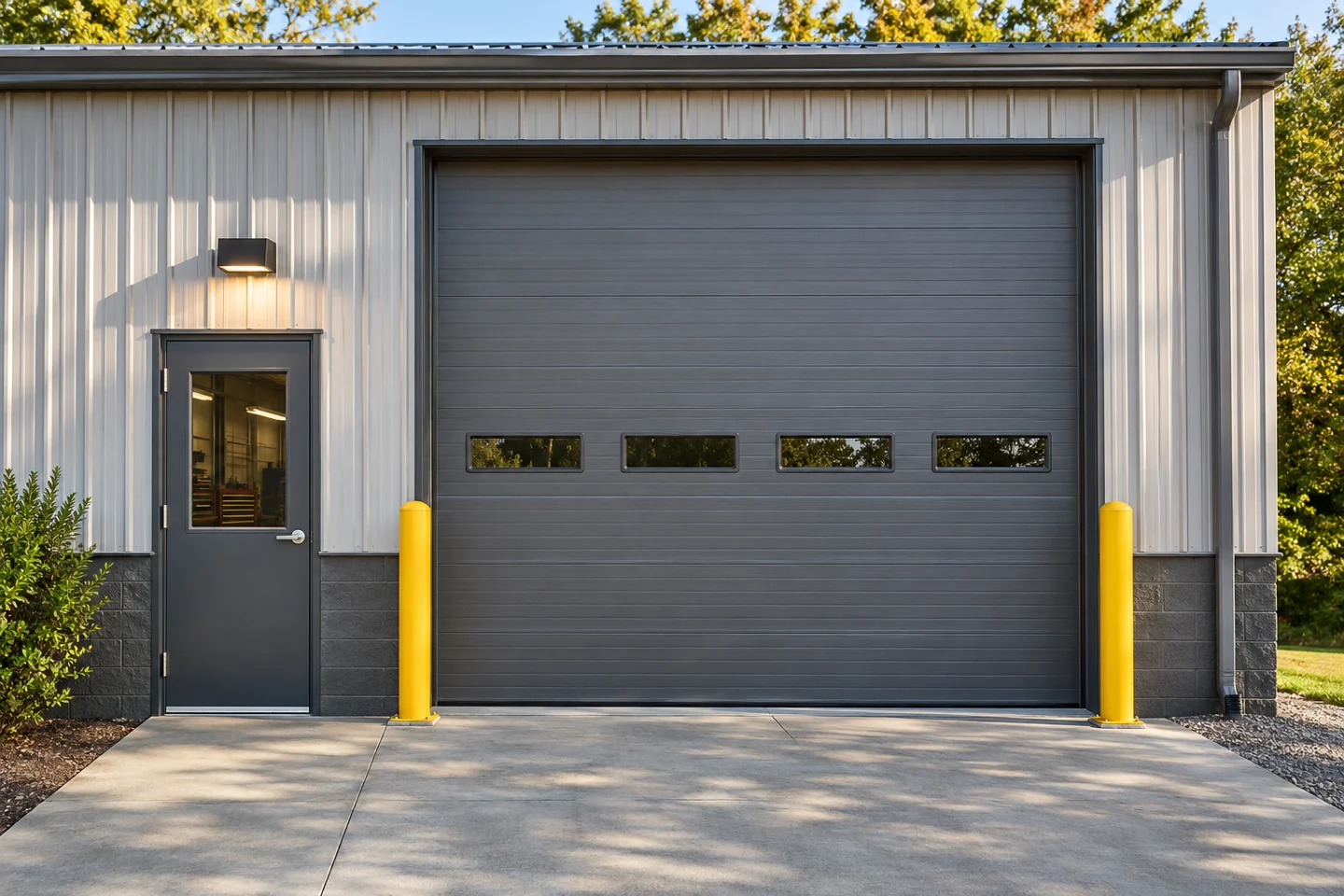
For Pittsburgh homes and properties
In the Pittsburgh footprint, integral garages beneath brick houses and detached garages on tight or sloping approaches can complicate access. Explain whether another entrance exists and whether a vehicle is trapped. This is practical information for the service discussion, not a reason to force the door.
Make the bay safe using site procedures
Keep people and vehicles clear of a damaged or unstable door. Follow your workplace’s isolation and reporting procedures and avoid allowing staff to cycle the door to reproduce the fault. Report whether the bay is open, closed or partly raised and whether an alternate route exists. Do not alter loaded hardware or defeat a safety interlock.
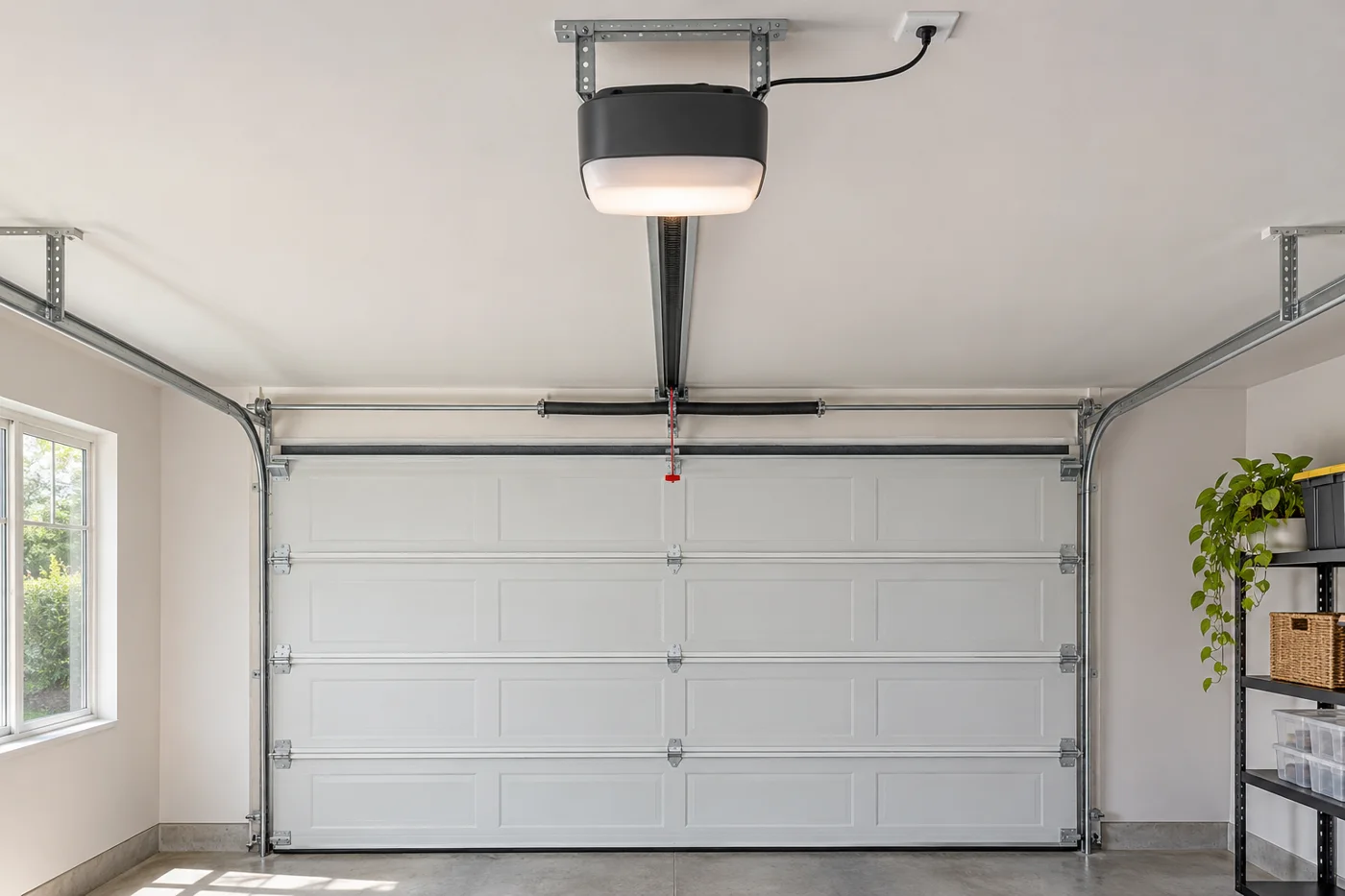
Separate downtime from repair scope
Describe operational constraints and a suitable inspection window, but do not assume an immediate dispatch or a completion time. Parts availability, door condition and service suitability have to be established. Ask for the fault, proposed work and return-to-service checks to be explained before authorizing it.
Keep useful records
Model information, maintenance history and the sequence of an incident can support diagnosis. After work, retain the service details and manufacturer care instructions. Discuss a maintenance approach appropriate to actual operating cycles. Commercial and household doors may look similar in a photograph while having quite different loads, controls and safety requirements.
Identify who can approve and who can isolate the opening
A useful commercial request includes the site contact, the person who can authorize work and the team responsible for keeping the affected bay clear. Explain whether the building is occupied, whether deliveries depend on that route and whether there is a safe alternate opening. Follow the workplace’s own isolation process rather than improvising restraints or asking an employee to hold a control. If an incident affected adjacent structure or equipment, report that too. A door-only repair discussion should not silently assume the rest of the loading area has been checked or declared safe.
Match maintenance records to the equipment
Keep model details, operating instructions, prior service records and the actual use pattern together where authorized personnel can find them. A frequently cycled opening may need a different maintenance discussion from an occasional-access door. Specialized controls, interlocks and other connected equipment should be identified before work is arranged. Ask which equipment the service scope includes and which requires a separate specialist. Afterward, document the work and the stated return-to-service checks. Avoid treating a successful opening cycle as proof that every safety or site requirement has been met; the applicable instructions and qualified assessment still matter.
Connect the next question
For a heavy or uneven door, read about spring and lifting-system assessment. If only the controls behave differently, explore opener diagnosis. When a new assembly is being considered, the installation guide explains fit and clearance. For a motor upgrade, compare the fit questions in opener installation.
Local considerations: New Kensington garage door guidance ↗ Oakmont garage door guidance ↗ . Check each locality’s listed ZIPs; a postal name does not establish complete town coverage.
Related reading: door will not open, repair or replace and seasonal care.
Further reading and safety references
Follow the instructions for your exact door and opener. General context: DASMA safety and maintenance; U.S. Consumer Product Safety Commission: automatic garage door openers. This guide supports recognition and planning; it is not a procedure for work on loaded hardware.