
For service questions, see garage door spring repair in Pittsburgh. Confirm the listed ZIP coverage before calling.
Recognize the change without testing the load
A loud bang from the garage followed by a door that barely moves can point to a spring failure. Other clues include a visible gap in a torsion spring, a slack cable or one side moving ahead of the other. Those clues are not a remote diagnosis. Keep a safe distance and stop operating the opener; do not repeatedly test how much the door will lift.
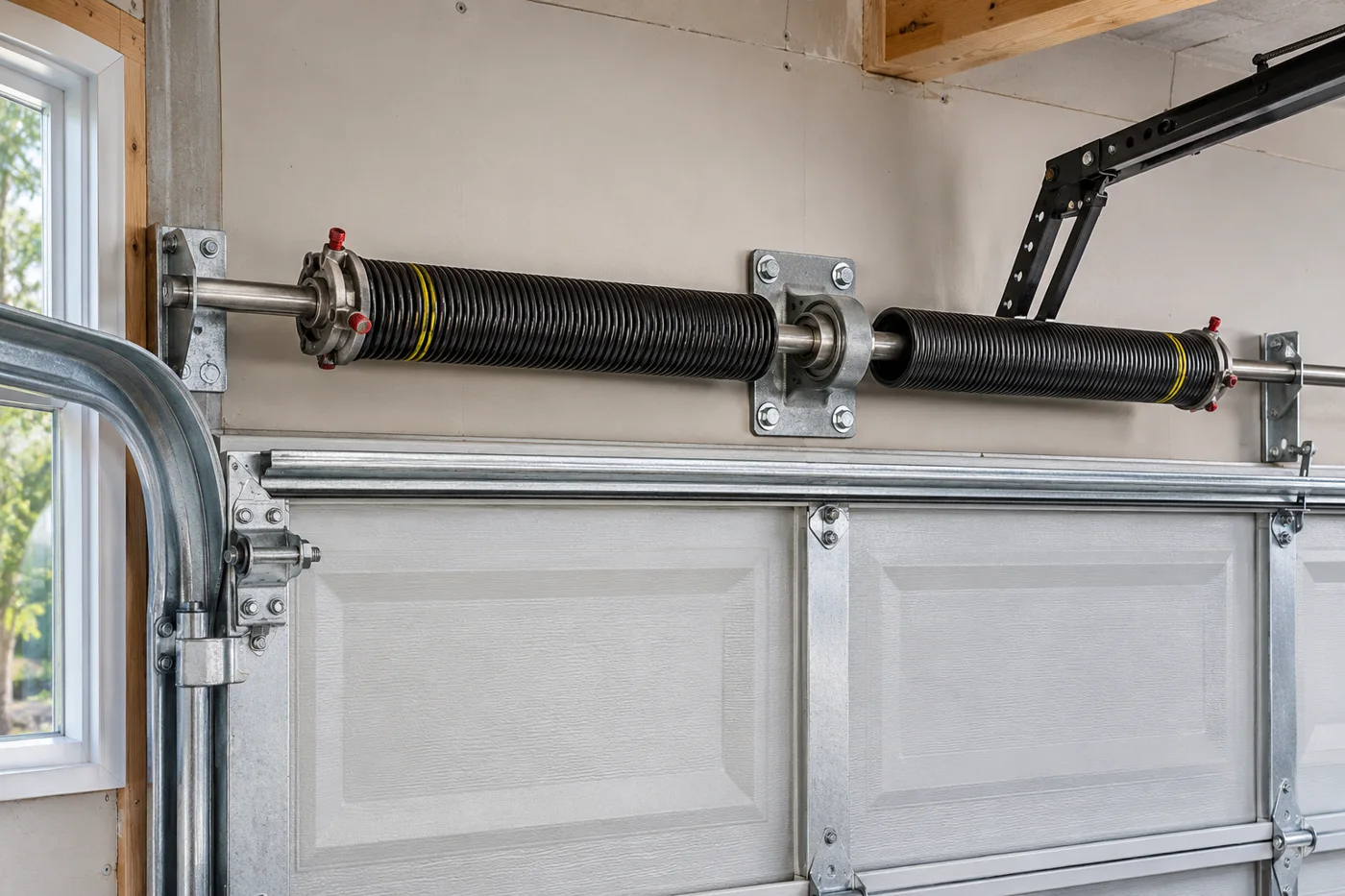
For Pittsburgh homes and properties
In the Pittsburgh footprint, integral garages beneath brick houses and detached garages on tight or sloping approaches can complicate access. Explain whether another entrance exists and whether a vehicle is trapped. This is practical information for the service discussion, not a reason to force the door.
Why the opener is not a substitute
The spring system counterbalances the door. The operator is designed to move a properly functioning door rather than carry its unsupported weight. Increasing force or fitting a larger motor can mask resistance without correcting the cause. A door that seems unusually heavy needs the lifting system assessed. Do not disconnect a raised or unstable door to investigate its balance.
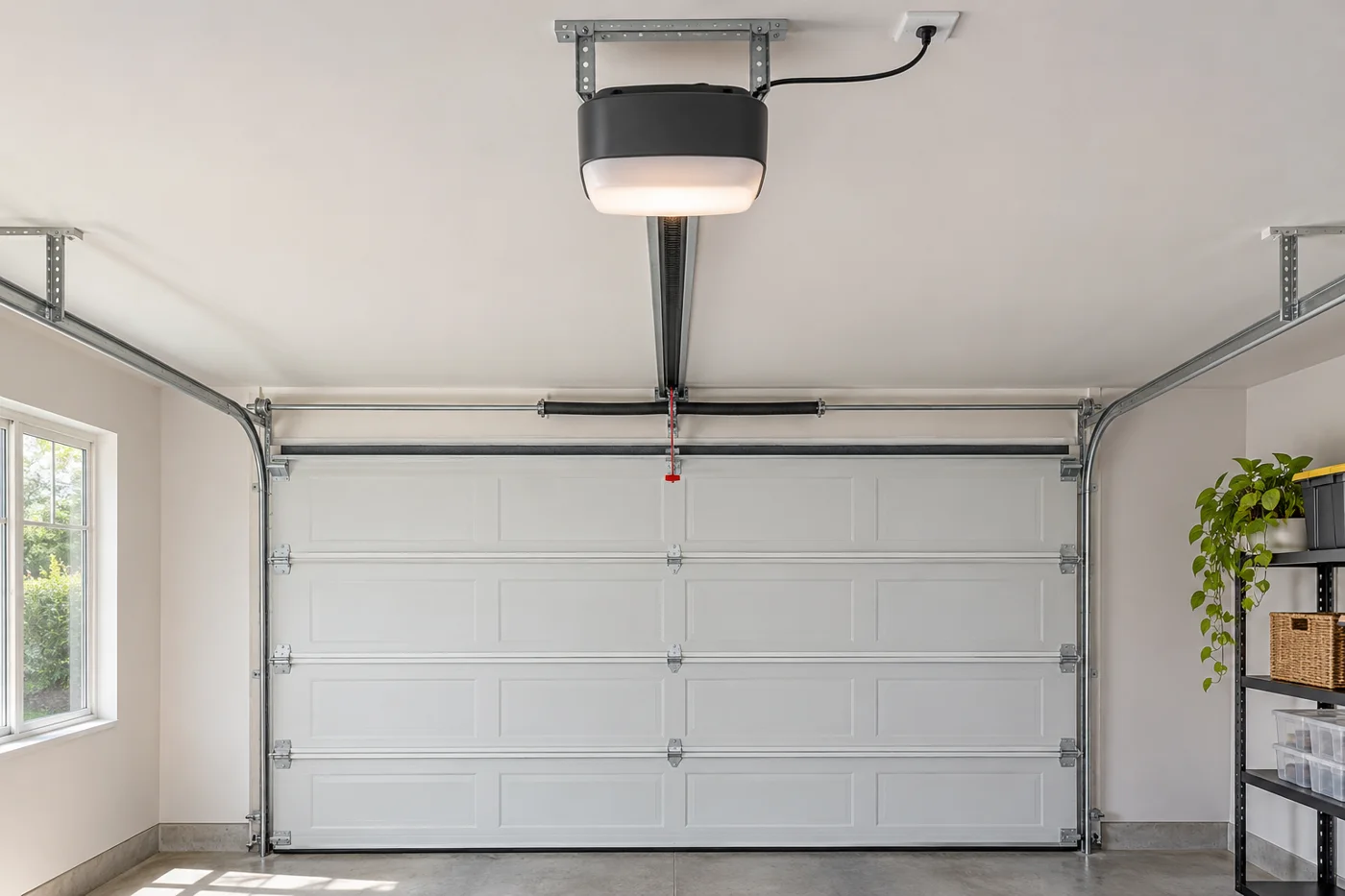
The repair conversation
Tell the service contact whether the door is open, closed or partly raised, and whether another entrance exists. Ask for spring sizing, cable condition, drums and balance to be considered together. Door weight and hardware determine appropriate replacement components; matching only the visible spring length is not a sound selection method.
Returning the system to use
After work, ask for the operating and safety checks to be explained. Keep the manufacturer’s care instructions and discuss the appropriate maintenance schedule for the door’s actual use. Spring work involves stored energy and specialized handling. This guide explains recognition and communication; it deliberately does not provide winding, removal or tension-adjustment instructions.
Cable trouble can appear alongside spring trouble
The cables, drums and springs are parts of the same lifting arrangement. A loose cable does not establish that the cable alone is the original problem, and a visibly separated spring does not show the condition of every other component. Report what is visible without reaching toward it. If the door is raised, do not try to shut it by hand or disconnect the operator to reduce strain. A partially supported door may move without warning. Keep the work area clear and identify any safe alternative entry so the service contact understands the access situation.
Ask about the door’s actual workload
A door used for every household departure has a different cycle pattern from one opened occasionally for storage. Explain how the garage is used and whether any previous spring or cable work is documented. Ask how replacement components are matched to the door and whether wear in the rest of the lifting system affects the recommendation. A spring’s appearance alone does not tell you its proper specification or the remaining life of other hardware. Keep written component and care information after the repair so future maintenance starts with an accurate record rather than another visual guess.
Connect the next question
For a heavy or uneven door, read about spring and lifting-system assessment. If only the controls behave differently, explore opener diagnosis. When a new assembly is being considered, the installation guide explains fit and clearance. For a motor upgrade, compare the fit questions in opener installation.
Local considerations: Buena Vista garage door guidance ↗ Butler garage door guidance ↗ . Check each locality’s listed ZIPs; a postal name does not establish complete town coverage.
Related reading: door will not open, repair or replace and seasonal care.
Further reading and safety references
Follow the instructions for your exact door and opener. General context: DASMA safety and maintenance; U.S. Consumer Product Safety Commission: automatic garage door openers. This guide supports recognition and planning; it is not a procedure for work on loaded hardware.